
More marketing doesn’t always mean more growth. Before increasing your advertising budget, publishing more content or investing in a new website, make sure you have a clear digital strategy.
Many businesses approach digital marketing by focusing on individual activities.
They post on social media because competitors are doing it. They invest in paid advertising because sales are slow. They redesign their website because the existing one looks outdated. Others spend money on search engine optimisation without knowing which customers they want to attract.
Each activity can be valuable. But without a clear strategy connecting them, businesses risk spending money on disconnected efforts that produce little measurable progress.
The problem isn’t necessarily the marketing channels. It’s the absence of a plan that connects those channels to business objectives.
What Is a Digital Strategy?
A digital strategy is a structured plan for using digital channels, platforms, content and technology to achieve specific business goals.
It establishes what a business wants to accomplish, who it needs to reach, which channels are most appropriate, what resources are required and how success will be measured.
Depending on the business, a digital strategy may cover:
- Audience research: Understanding customer needs, behaviours, motivations and purchasing decisions.
- Market and competitor analysis: Identifying opportunities, gaps and areas where your business can differentiate itself.
- Channel selection: Deciding how your website, search presence, social media, email and paid advertising should work together.
- Content planning: Developing useful, relevant content that answers customer questions and supports purchasing decisions.
- Measurement: Defining the metrics that demonstrate whether your digital activities are contributing to business growth.
A strategy provides direction. Individual marketing activities then become part of a coordinated plan rather than isolated tasks.
1. Start With Business Goals, Not Marketing Channels
One of the most common mistakes businesses make is choosing a marketing channel before defining the problem they want to solve.
A business might decide it needs Instagram growth when its real challenge is generating qualified enquiries. Another might invest in paid advertising when its website struggles to convert visitors into customers.
These situations require different solutions.
Before choosing your channels, establish your primary objective. Are you trying to increase brand awareness, generate leads, improve online sales, attract more qualified website visitors or retain existing customers?
Your objective should influence every subsequent decision.
For example, a service-based business that needs more qualified enquiries might prioritise a conversion-focused website, search visibility and targeted advertising. A new consumer brand might initially focus more heavily on audience research, creative content and brand awareness.
The goal is not to use every available channel. It is to select the channels that best support the outcome you need.
2. Understand Your Audience Before Creating Content
Effective marketing begins with understanding the people you want to reach.
Knowing that your target audience consists of business owners, professionals or young adults is only a starting point. You also need to understand their challenges, questions, preferences and reasons for choosing one solution over another.
Consider what potential customers search for before making a purchase. What concerns prevent them from buying? What information do they need before trusting your business? Which platforms do they use to discover and evaluate providers?
These insights should influence your messaging, content and channel selection.
For example, a business selling professional services may benefit from educational articles that answer customer questions, case studies that demonstrate its experience, and a website that explains its services clearly.
When content reflects real customer needs, it has a stronger purpose than simply filling a publishing calendar.
3. Make Your Website Work as Part of the Strategy
Your website should do more than establish that your business exists.
It should help visitors understand what you offer, why it matters, why they should trust you and what to do next.
A visually attractive website can still underperform if its messaging is unclear, its navigation is confusing or its calls to action are difficult to find.
Before investing in a redesign, assess the existing website.
Ask yourself:
- Does the homepage communicate the value of the business quickly?
- Are the services or products clearly explained?
- Can visitors easily find important information?
- Does the website work well on mobile devices?
- Can potential customers take the next step without confusion?
- Are website enquiries, sales and other important actions being measured?
Sometimes, improving the messaging, user experience, page structure or conversion process can be more useful than rebuilding the entire website.
Your website should also support your other marketing activities. Search optimisation can help people discover relevant pages, social media can introduce your brand to new audiences, and paid advertising can direct interested prospects towards specific offers.
When these elements work together, the website becomes an active part of your growth strategy.
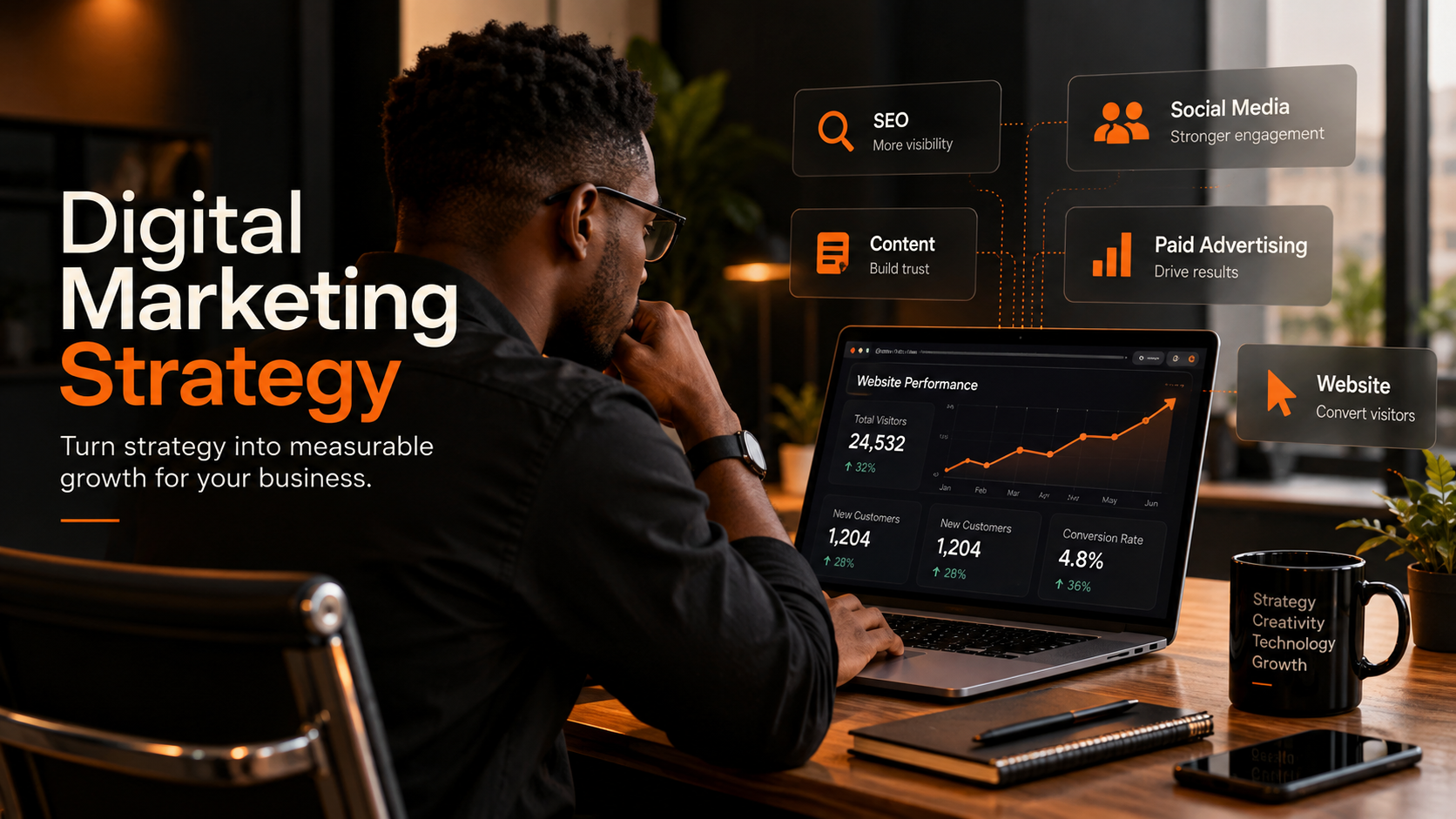
4. Connect SEO, Social Media, Content and Paid Advertising
Digital marketing channels are often managed separately, even when they serve the same business objectives.
A more coordinated approach allows each channel to contribute to the wider strategy.
Search engine optimisation (SEO) helps your business become discoverable when people search for relevant information, products or services. It can support long-term visibility, although results depend on competition, website quality and other factors.
Social media marketing helps you communicate with audiences, distribute content, build relationships and increase brand visibility.
Content marketing provides useful information that helps potential customers understand their problems, evaluate options and make informed decisions.
Paid advertising can help you reach selected audiences and test offers, messages and campaigns. Its effectiveness depends on targeting, creative quality, conversion tracking and the economics of your offer.
These channels should not operate in isolation.
Customer questions gathered from social media can inform blog topics. Search data can reveal what potential customers want to know. Insights from paid campaigns can help identify which messages deserve further testing. Website analytics can show where visitors lose interest or fail to complete an intended action.
The result is a more connected marketing system in which insights from one activity can improve another.
5. Measure What Matters to the Business
A digital strategy needs clear measures of success.
Metrics such as impressions, followers, clicks and engagement can help explain how people interact with your marketing. However, these numbers do not automatically demonstrate business growth.
The right metrics depend on your objectives.
If your priority is lead generation, monitor qualified enquiries, conversion rates and cost per lead. If you sell online, pay attention to purchases, revenue, average order value and customer acquisition costs. If your objective is organic growth, assess relevant search visibility, qualified organic traffic and the actions visitors take after arriving on your website.
It is also important to establish a baseline before making major changes. Without one, it becomes difficult to determine whether performance has improved.
Measurement should inform decisions, not simply produce reports.
If a campaign generates substantial traffic but few qualified enquiries, investigate the audience, offer, messaging and landing page. If social content attracts engagement but does not support your business objectives, reconsider what the content is designed to achieve.
The purpose of measurement is to understand what is working, identify what needs improvement and allocate resources more intelligently.
6. Build a Plan You Can Actually Execute
A strategy does not need to involve every digital channel or require a large marketing budget.
In fact, a focused plan is often more practical than trying to do everything at once.
Start by identifying your most important business objective. Assess your existing digital presence, available resources and current performance. Then prioritise the activities most likely to address your biggest challenges.
Your initial plan might involve improving your website’s service pages, publishing useful search-focused articles, strengthening your social media content and setting up conversion tracking.
Another business might need to improve its product pages, test a specific advertising campaign or address technical SEO problems before investing further in content.
Set realistic timelines, assign responsibility for implementation and review progress regularly. Adjust the plan as you learn more about your audience and the results of your activities.
A digital strategy should provide direction without becoming so rigid that it prevents improvement.
The Bottom Line
Digital marketing works best when individual activities contribute to a clear business objective.
Publishing more content, running more advertisements or redesigning a website may be appropriate decisions, but only when they address a real need and form part of a considered plan.
Before committing more resources to marketing, step back and evaluate the bigger picture. Understand your audience, define your objectives, choose the right channels, connect your digital assets and measure meaningful outcomes.
The question isn’t simply how much you should spend on digital marketing. It’s whether your digital activities are working together to move your business forward.
At Traceline Digital, we believe effective digital growth begins with strategy. By connecting strategy, creativity, technology and data, businesses can make more informed decisions about their digital presence and build a stronger foundation for growth.
Need a clearer direction for your digital marketing? Explore Traceline Digital’s services to see how strategy, SEO, social media, website development and performance marketing can support your business goals.
Why Your Business Needs a Digital Strategy Before Spending More on Marketing
More marketing doesn’t always mean more growth. Before increasing your advertising budget, publishing more content or investing in a new website, make sure you have a clear digital strategy.
Many businesses approach digital marketing by focusing on individual activities.
They post on social media because competitors are doing it. They invest in paid advertising because sales are slow. They redesign their website because the existing one looks outdated. Others spend money on search engine optimisation without knowing which customers they want to attract.
Each activity can be valuable. But without a clear strategy connecting them, businesses risk spending money on disconnected efforts that produce little measurable progress.
The problem isn’t necessarily the marketing channels. It’s the absence of a plan that connects those channels to business objectives.
What Is a Digital Strategy?
A digital strategy is a structured plan for using digital channels, platforms, content and technology to achieve specific business goals.
It establishes what a business wants to accomplish, who it needs to reach, which channels are most appropriate, what resources are required and how success will be measured.
Depending on the business, a digital strategy may cover:
- Audience research: Understanding customer needs, behaviours, motivations and purchasing decisions.
- Market and competitor analysis: Identifying opportunities, gaps and areas where your business can differentiate itself.
- Channel selection: Deciding how your website, search presence, social media, email and paid advertising should work together.
- Content planning: Developing useful, relevant content that answers customer questions and supports purchasing decisions.
- Measurement: Defining the metrics that demonstrate whether your digital activities are contributing to business growth.
A strategy provides direction. Individual marketing activities then become part of a coordinated plan rather than isolated tasks.
1. Start With Business Goals, Not Marketing Channels
One of the most common mistakes businesses make is choosing a marketing channel before defining the problem they want to solve.
A business might decide it needs Instagram growth when its real challenge is generating qualified enquiries. Another might invest in paid advertising when its website struggles to convert visitors into customers.
These situations require different solutions.
Before choosing your channels, establish your primary objective. Are you trying to increase brand awareness, generate leads, improve online sales, attract more qualified website visitors or retain existing customers?
Your objective should influence every subsequent decision.
For example, a service-based business that needs more qualified enquiries might prioritise a conversion-focused website, search visibility and targeted advertising. A new consumer brand might initially focus more heavily on audience research, creative content and brand awareness.
The goal is not to use every available channel. It is to select the channels that best support the outcome you need.
2. Understand Your Audience Before Creating Content
Effective marketing begins with understanding the people you want to reach.
Knowing that your target audience consists of business owners, professionals or young adults is only a starting point. You also need to understand their challenges, questions, preferences and reasons for choosing one solution over another.
Consider what potential customers search for before making a purchase. What concerns prevent them from buying? What information do they need before trusting your business? Which platforms do they use to discover and evaluate providers?
These insights should influence your messaging, content and channel selection.
For example, a business selling professional services may benefit from educational articles that answer customer questions, case studies that demonstrate its experience, and a website that explains its services clearly.
When content reflects real customer needs, it has a stronger purpose than simply filling a publishing calendar.
3. Make Your Website Work as Part of the Strategy
Your website should do more than establish that your business exists.
It should help visitors understand what you offer, why it matters, why they should trust you and what to do next.
A visually attractive website can still underperform if its messaging is unclear, its navigation is confusing or its calls to action are difficult to find.
Before investing in a redesign, assess the existing website.
Ask yourself:
- Does the homepage communicate the value of the business quickly?
- Are the services or products clearly explained?
- Can visitors easily find important information?
- Does the website work well on mobile devices?
- Can potential customers take the next step without confusion?
- Are website enquiries, sales and other important actions being measured?
Sometimes, improving the messaging, user experience, page structure or conversion process can be more useful than rebuilding the entire website.
Your website should also support your other marketing activities. Search optimisation can help people discover relevant pages, social media can introduce your brand to new audiences, and paid advertising can direct interested prospects towards specific offers.
When these elements work together, the website becomes an active part of your growth strategy.
4. Connect SEO, Social Media, Content and Paid Advertising
Digital marketing channels are often managed separately, even when they serve the same business objectives.
A more coordinated approach allows each channel to contribute to the wider strategy.
Search engine optimisation (SEO) helps your business become discoverable when people search for relevant information, products or services. It can support long-term visibility, although results depend on competition, website quality and other factors.
Social media marketing helps you communicate with audiences, distribute content, build relationships and increase brand visibility.
Content marketing provides useful information that helps potential customers understand their problems, evaluate options and make informed decisions.
Paid advertising can help you reach selected audiences and test offers, messages and campaigns. Its effectiveness depends on targeting, creative quality, conversion tracking and the economics of your offer.
These channels should not operate in isolation.
Customer questions gathered from social media can inform blog topics. Search data can reveal what potential customers want to know. Insights from paid campaigns can help identify which messages deserve further testing. Website analytics can show where visitors lose interest or fail to complete an intended action.
The result is a more connected marketing system in which insights from one activity can improve another.
5. Measure What Matters to the Business
A digital strategy needs clear measures of success.
Metrics such as impressions, followers, clicks and engagement can help explain how people interact with your marketing. However, these numbers do not automatically demonstrate business growth.
The right metrics depend on your objectives.
If your priority is lead generation, monitor qualified enquiries, conversion rates and cost per lead. If you sell online, pay attention to purchases, revenue, average order value and customer acquisition costs. If your objective is organic growth, assess relevant search visibility, qualified organic traffic and the actions visitors take after arriving on your website.
It is also important to establish a baseline before making major changes. Without one, it becomes difficult to determine whether performance has improved.
Measurement should inform decisions, not simply produce reports.
If a campaign generates substantial traffic but few qualified enquiries, investigate the audience, offer, messaging and landing page. If social content attracts engagement but does not support your business objectives, reconsider what the content is designed to achieve.
The purpose of measurement is to understand what is working, identify what needs improvement and allocate resources more intelligently.
6. Build a Plan You Can Actually Execute
A strategy does not need to involve every digital channel or require a large marketing budget.
In fact, a focused plan is often more practical than trying to do everything at once.
Start by identifying your most important business objective. Assess your existing digital presence, available resources and current performance. Then prioritise the activities most likely to address your biggest challenges.
Your initial plan might involve improving your website’s service pages, publishing useful search-focused articles, strengthening your social media content and setting up conversion tracking.
Another business might need to improve its product pages, test a specific advertising campaign or address technical SEO problems before investing further in content.
Set realistic timelines, assign responsibility for implementation and review progress regularly. Adjust the plan as you learn more about your audience and the results of your activities.
A digital strategy should provide direction without becoming so rigid that it prevents improvement.
The Bottom Line
Digital marketing works best when individual activities contribute to a clear business objective.
Publishing more content, running more advertisements or redesigning a website may be appropriate decisions, but only when they address a real need and form part of a considered plan.
Before committing more resources to marketing, step back and evaluate the bigger picture. Understand your audience, define your objectives, choose the right channels, connect your digital assets and measure meaningful outcomes.
The question isn’t simply how much you should spend on digital marketing. It’s whether your digital activities are working together to move your business forward.
At Traceline Digital, we believe effective digital growth begins with strategy. By connecting strategy, creativity, technology and data, businesses can make more informed decisions about their digital presence and build a stronger foundation for growth.
Need a clearer direction for your digital marketing? Explore Traceline Digital’s services to see how strategy, SEO, social media, website development and performance marketing can support your business goals.